Beat Bulimia!

Introduction

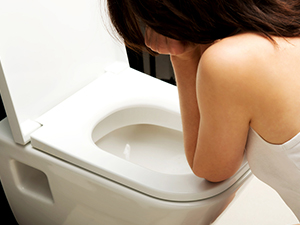
Bulimia is an eating disorder where people consume a large amount of food; also known as binge eating and then make themselves sick after eating (English Oxford Dictionaries, 2018) states ‘an emotional disorder in which a person repeatedly eats too much and then forces him- or herself to vomit.’ They do this as they have had a high calorie intake in an extremely short amount of time and vomit to get rid of the extra calories. Some people with Bulimia will also use large amounts of laxatives (to make them poo more) or do extensive amounts of exercise to lose the calories; however, some people with Bulimia will do a combination of all to try to prevent putting weight on. Both men and women of any age can have bulimia; however, it is more common in young women who are in their mid to late teens (NHS,2017).

When a person with Bulimia binges on food they can consume anywhere between 1,500 calories and 3,500 calories, when they self-induce vomiting a person can lose around 1,200 calories. They also make ‘markers’ for self-induced vomiting, for example eating carrots at the start of the meal this then changes the colour of the vomit to orange, so they know that their gastric is the empty. This is however ineffective as the food mixes during eating and the mixing within the stomach. Research has also shown that over time people with Bulimia do gradually gain weight over time which suggests their body has found a way to store the calories despite self-induced vomiting (Waller, G et al.,2007).

Does Social Media play a role in Bulimia?

Someone’s genetics alone does not mean they will have an eating disorder. For someone to have an eating disorder such like Bulimia within the history of their family does not mean that they will develop one in the future. They can play a small part in however for Bulimia to ‘take shape’ it is a combination of factors including, biological, psychological, environmental and societal influences. (Walden Behavioural Care,2020) 

Social Media is something that surround people and takes up a subsequent amount of people lives and can have detrimental effect one people and their mental health. As mention before people with Bulimia also have unrealistic idols as most images shared through social media can be edited and changed, and this can reinforce the feeling of inadequacy and worthlessness (Kearns,2017). Within the world of social media there are sites that people may come across where it is acceptable to ‘roast’ people for their looks or weight. This is also easy for people with Bulimia to come across and become engrossed in due to their feeling of inadequacy and worthlessness, this can then fuel them to binge more and self-induce vomiting.

How does Bulimia effect people’s health?

Living with Bulimia can affect our health in many ways such like;

  • Felling lethargic and weaker than normal.
  • Bulimia can cause dental problems as the stomach acid from persistent self-induced vomiting can damage the tooth enamel and it can also cause bad breath.
  • It can cause persistent sore throats or can sometimes tear the lining of your throat.
  • Bulimia can cause irregular or absent periods.
  • People with Bulimia can also have dry skin and hair.
  • Brittle fingernails.
  • Swollen glands are also common due to the self-induced vomiting.
  • Fits and muscle spasms are also linked to Bulimia.
  • Bulimia can also affect the heart, kidneys and bowels, sometimes resulting in permanent constipation.
  • People with Bulimia will more than likely develop bone problems, such like Osteoporosis particularly if they are showing both sings of Anorexia and Bulimia.

How can people safely stop self-induced vomiting?

The first step in recovering from Bulimia is a guided self-care programme which is carried out over four weeks. Throughout this the person with Bulimia will be given a logbook where they monitor what they eat. In doing this they can notice any changes in their behaviour; the person is also given a more realistic eating plan meaning they so can regulate their food intake and they know what to eat at each mealtime. Throughout this programme they also learn about what triggers their urge to self-induce vomiting and learn mechanisms to prevent these urges to occur. The final thing that they work on is finding what the underlying cause is and work to overcome the problem in a healthier, safer way; when on this programme the person with Bulimia works with other health care professionals to ensure that it is done in a safe manner (NHS,2017).

Cognitive Behavioural Therapy (CBT) could be offered to someone with Bulimia, as stated in the last chapter it investigates your emotions and thoughts and how it contributes to Bulimia. It also investigates how the person with Bulimia views their body shape and their weight. CBT normally last for 20 weeks and within this time they normally have 20 sessions. Throughout the sessions the therapist will help adopt regular eating habits and will show the person with Bulimia how they can stick them. Also, the therapist will teach them how to manage their feelings and difficult situations to stop the chance of a relapse after the therapy ends (NHS,2017).

For children and younger people who have Bulimia then Family Therapy is something that is offered. This contains the patient and their family working together with the therapist exploring how Bulimia has affected the family and what support can be put in place to help recovery (NHS,2017)

Antidepressants such like Fluoxetine may also be offered to someone who has Bulimia while going through recovery however they must be taking part in therapy as antidepressants are not offered as the only treatment. They are only offered to patients who also struggle with:

  • anxiety or depression
  • social phobia
  • obsessive compulsive disorder (OCD)

Antidepressants are very rarely prescribed for children or young people under 18 (NHS,2017)

References

English Oxford Living Dictionaries, 2018.Bulimia. [Online] Available at: https://www.oxfordlearnersdictionaries.com/definition/english/bulimia?q=bulimia [Accessed 27/072020]

Claire Kearns, (2017). Social Media and Eating Disorders. [Online] Available at https://mirror-mirror.org/eating-disorders-2-2/social-media-and-eating-disorders [Accessed 27/07/2020]

NHS, 2017. Treatment. [Online] Available at: https://www.nhs.uk/conditions/bulimia/treatment/ [Accessed 28/07/2020]

NHS, 2017. Bulimia. [Online] Available at: https://www.nhs.uk/conditions/Bulimia/ [Accessed 27/07/2020]

Walden Behaviour Care, 2020. [Online] Available at [https://www.waldeneatingdisorders.com/blog/is-bulimia-genetic/ [Accessed 27/07/2020]

Waller, G., Cordery, H., Corstorphine, E., Hinrichsen, H., Lawson, R., Mountford, V., & Russell, K. (2007). Cognitive-behavioral therapy for the eating disorders: A comprehensive treatment guide. Cambridge, UK: Cambridge University Press.

What is Anorexia Nervous?

Introduction

Anorexia is an eating disorder in which people have a severe restriction for eating; as (English Oxford Living Dictionaries, 2018) states ‘Anorexia- Lack or loss of appetite for food (as a medical condition).’ This is because they have a fear of becoming obese, this fear is so intense that they continue to behave this way even when they are crucially underweight. The average calorie intake for someone with Anorexia Nervosa is around 1,000 per day; however, to maintain a ‘healthy’ weight an adult woman should consume between 1,500 calories to 2,000 calories per day (Martain, et al., 2013). Many people with this eating disorder over exercise and will most likely seen pacing backwards and forwards after consuming a meal.

  This eating disorder ‘Can occur from as early as seven years old.’ (Martain, et al., 2013:514) There is only a small percentage of adolescent and young women affected; however, men between the ages of eight years to fourteen years has risen to 25%. With the people affected by this disorder it is alarming to see that (Martain, et al., 2013:516) ‘About one anorexic patient in 30 dies of the disorder.’ In 1997 Frederickson and Roberts developed a theory known as the ‘self-objectification’ A summary of this theory is ‘Western cultures regard female bodies to be viewed and evaluated.’ (Martain, et al., 2013). This looks very closely at the impact culture has on people’s views of weight. Many psychologists back this theory but they also explore the ideas of biological, cognitive and sociocultural explanations.

Do cultural norms effect people’s eating habits?

If cultural norms were reduced, then women would begin to compare their bodies with more realistic peers. But in the society, we live in today cultural norms are more prominent therefore people are more than likely to pick impractical models and celebrities to compare with. The way in which women are portrayed through social media is also a big problem for people who suffer from this disorder as they can find constant flaws with their own body. MP Caroline Nokes went into schools and talked to students between twelve years old to thirteen-year olds and (Roxby, 2014) states in her interview with Nokes ‘images in the media can be altered, enhanced and improved to create something far from realistic.’ Social media is its own world and the culturation theory claims that the more we are exposed to this material then this becomes our ‘norm’ and believe that what we see is natural and real.

Our biological needs which are stated by (Martain, et al., 2013:500) ‘to survive we need air, water, various vitamins and minerals.’ With the restriction of food going into their bodies they have a high chance of getting osteoporosis which is a bone condition. Having osteoporosis makes it easier for your bones to break as they become weaker over certain periods of time. It also reduces their blood level of a chemical called tryptophan which is needed for nitrogen balance in adults and helps children to grow (Gotter, 2018). Some psychologists also believe that this disorder can be hereditary and caused by abnormalities from the parent who may have had the disorder themselves.

How does Anorexia effect people’s health?

Anorexia strains our bodies in various ways due to the lack of food intake.

  • People with Anorexia have problems with their bones and muscles. They become more lethargic and weaker.
  • Anorexia can cause problems with fertility.
  • As they are more lethargic, they also have a less of a sex drive.
  • Anorexia causes problems with the heart and blood vessels- including poor circulation, irregular heartbeats, low blood pressure, heart valve disease, heart failure and swelling in the hands, feet and face (Oedema).
  • Anorexia also effects the brain and nervous system making seizures more common, also difficulty with concentration and memory.
  • Anorexia can cause problems with the bowls and kidney.
  • People with Anorexia more likely have weaker immune systems making it harder for them to fight off other illnesses.
  • Anaemia is also common in people with Anorexia due to the lack of iron in their blood.

Psychologists believe that there are many ways in which people who have Anorexia can get help to regain control over their eating and how to gain a healthy weight again.

How can people safely begin to eat “normally” again?

Cognitive Behavioural Therapy (CBT) investigates the way that people view food and helps them to recognise how self-deflating patterns can undermine the successes of eating healthy and gaining weight (Clinic, 2016). It also helps the person to regain control over their feelings towards food and coping mechanisms when self-deflating thoughts come to their minds. They also help to build up a food diary which monitors what types of food you are eating, what times you eat, how you feel when eating a meal and if you are doing anything at the time you are eating (Clinic, 2016).

Specialist supportive clinical management (SSCM) this consists of a minimum of 20 weekly sessions with a therapist who will help the person to understand what the triggers are for Anorexia. They will also teach the individual the importance of the correct nutrition’s and will set goals of weight gain and help you to meet the goals set (NHS, 2018).

Adolescent-focused psychotherapy is specifically for teenagers who have anorexia. This type of therapy can last for as long as eighteen months and it helps the teenager to understand what is causing them to be anorexic. Introducing presenters that can be put in place to stop them from being anorexic and understand the effects of what under eating does to their bodies. It also gives them help on how to cope with the fears they have about gaining weight and educates them on what they need to do to be healthy. 

References

Clinic, C., 2016. The Psychology of Eating. [Online] Available at: https://my.clevelandclinic.org/health/articles/10681-the-psychology-of-eating [Accessed 17/12/2018].

English Oxford Living Dictionaries, 2018. Anorexia. [Online] Available at: https://en.oxforddictionaries.com/definition/smelt [Accessed 19/11/2018].

Gotter, A., 2018. What is Tryptophan. [Online] Available at: https://www.healthline.com/health/tryptophan [Accessed 22/11/2018].

Gross, R., 2015. Psychology, The Science of Mind and Behaviour. 7th ed. London: Hodder Education.

Neil Martain, G., Carlson, N. R. & Buskist, W., 2013. Psychology. 7th ed. Harlow: Pearson.

NHS, 2018. Treatment. [Online] Available at: https://www.nhs.uk/conditions/anorexia/treatment/ [Accessed 17/12/2018].

Roxby, P., 2014. Does Social Media impact on Body Image. [Online] Available at: https://www.bbc.com/news/health-29569473 [Accessed 22/11/2018].

Waller, G., Cordery, H., Corstorphine, E., Hinrichsen, H., Lawson, R., Mountford, V., & Russell, K. (2007). Cognitive-behavioral therapy for the eating disorders: A comprehensive treatment guide. Cambridge, UK: Cambridge University Press.